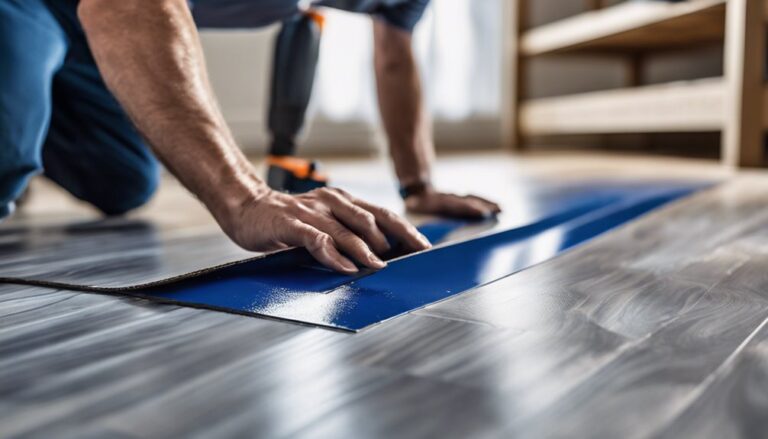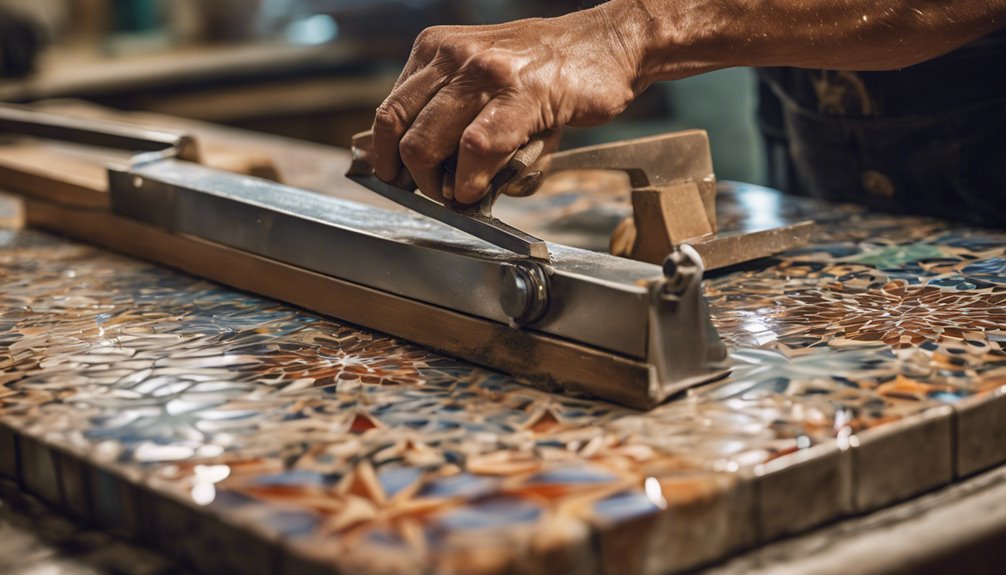

To cut floor tiles, start by gathering necessary tools like a tile cutter, wet saw, or tile nippers. Make sure your workspace is clean and well-lit for safety and accuracy. Measure your tiles carefully, using a fine-tip pencil to mark cuts on the reverse side. Techniques vary: score-and-snap for straight cuts or wet saws for cleaner results. For intricate shapes, use tile nippers. Always wear safety goggles to protect your eyes from debris. Once you've mastered these techniques, you can confidently tackle your tile project and uncover more detailed strategies for a successful installation.
Choosing the Right Tools
When cutting floor tiles, selecting the right tools is essential for achieving clean, precise edges. You'll encounter various tile cutter types, such as manual tile cutters, wet saws, and snap cutters. Each type offers unique advantages depending on your project needs. Manual cutters provide portability and simplicity, while wet saws offer superior cutting accuracy, especially for thicker tiles. Snap cutters, on the other hand, excel in quick, straight cuts. Choosing the right tool not only enhances your efficiency but also impacts the quality of your finished work. Consider factors like tile material, thickness, and your comfort level with each tool. By making informed choices, you can enjoy the freedom of a flawless installation without the frustration of uneven cuts.
Preparing Your Workspace
Before you start cutting tiles, clear the area of any obstacles to create a safe workspace. Gather all necessary tools, including a tile cutter, safety goggles, and measuring tape, to guarantee efficiency. Finally, make certain the workspace is well-lit to avoid mistakes and enhance accuracy.
Clear the Area
To guarantee a smooth tile cutting process, it's crucial to clear the area of any obstacles or debris. Start by conducting thorough floor cleaning; remove dirt, dust, and any old materials that could interfere with your work. Next, focus on space organization; confirm that your workspace is free from clutter. Move furniture, tools, and other items out of the way, creating a designated zone specifically for tile cutting. This not only prevents accidents but also enhances efficiency, allowing you to concentrate fully on your task. Verify that the floor surface is level and stable, as this will provide a solid foundation for cutting tiles accurately. With a clean and organized space, you'll be ready to proceed with confidence.
Gather Necessary Tools
Equipping yourself with the right tools is essential for an efficient tile cutting process. Your tool selection can greatly impact the quality of your work. Here's a quick reference table for necessary tools:
| Tool | Purpose | Notes |
|---|---|---|
| Tile Cutter | Straight cuts | Manual or electric model |
| Wet Saw | Precision cuts | Ideal for thicker tiles |
| Measuring Tape | Accurate measurements | Guarantee precision |
| Safety Goggles | Eye protection | Mandatory for safety |
| Tile Nippers | Irregular cuts | Useful for detailed work |
Gather these tools before starting, and you'll be well-prepared for your tile cutting project. With the right equipment in hand, you'll enjoy the freedom to create a flawless installation.
Ensure Proper Lighting
Having gathered your tools, the next step is ensuring your workspace is well-lit. Proper lighting is essential for accurate cuts and minimizing errors. Consider various lighting options, such as overhead fixtures, portable work lights, or task lamps. Position these lights to eliminate shadows, focusing on your cutting area for ideal visibility. Natural light can also enhance workspace illumination, so if possible, work near a window. Avoid working in dimly lit spaces, as this can strain your eyes and lead to mistakes. Adjust the brightness and angle of your lights to suit your preferences, ensuring you can see your measurements and cutting lines clearly. This attention to lighting will empower you to cut tiles with confidence and precision.
Measuring and Marking Tiles
To achieve precise cuts, you need reliable tools for accurate measurement, such as a measuring tape and a square. Start by measuring your space carefully, then use a pencil or a marker to clearly indicate your cut lines. Employing proper techniques when marking tiles will guarantee clean edges and minimize errors during cutting.
Tools for Accurate Measurement
Accurate measurements are essential for a successful tile installation, guaranteeing each piece fits perfectly within the designated space. To achieve this, you'll need a reliable measuring tape, which allows you to gauge dimensions with precision. Look for one marked in both inches and centimeters for versatility. Additionally, a laser level is invaluable, as it projects a straight, level line across your workspace. This tool helps you maintain consistency and alignment, vital for aesthetic appeal. Position the laser level at the starting point of your installation, and use the measuring tape to confirm distances. By utilizing these tools effectively, you can guarantee that your tiles are cut and placed with the utmost accuracy, paving the way for a flawless finish.
Techniques for Marking Tiles
While measuring tiles accurately is essential, marking them properly guarantees that your cuts are precise and clean. To achieve the best results, you should employ effective marking techniques that align with your tile layout. Here are some tips to take into account:
- Use a straightedge for clean lines.
- Choose a fine-tip pencil or chalk for visibility.
- Mark on the tile's backside to prevent visible lines on the front.
- Measure twice before marking to verify accuracy.
- Avoid pressure that could cause tile breakage during marking.
Different Cutting Techniques
When it comes to cutting floor tiles, there are several techniques you can employ to achieve precise results. One common method is the score-and-snap technique, where you score the tile with a glass cutter and then snap it along the line. Another approach is using a wet saw, which offers clean cuts and is ideal for harder materials. For intricate shapes, a tile nipper allows for more detailed adjustments. If you're cutting small pieces, a handheld tile cutter can be efficient. Remember these tile cutting tips: always wear safety gear, measure twice, and practice on scrap tiles first. By mastering these different cutting methods, you'll gain the freedom to create stunning tile layouts.
Using a Tile Cutter
Using a tile cutter can streamline your project, especially if you need to make straight cuts quickly and efficiently. Understanding the different tile cutter types is essential for achieving cutting accuracy. Here are key features to take into account:
- Manual Tile Cutters: Ideal for small jobs, they're lightweight and portable.
- Electric Tile Cutters: Great for larger projects, offering speed and precision.
- Score-and-Snap Cutters: Provide clean edges and are easy to use.
- Rail Cutters: Best for long tiles, ensuring straight cuts over extended lengths.
- Diamond Blade Cutters: Perfect for tough materials, offering durability and performance.
Choose the right tile cutter type to enhance your results and enjoy the freedom of achieving professional-quality cuts.
Employing a Wet Saw
A wet saw is an invaluable tool for achieving precise cuts in ceramic, porcelain, and natural stone tiles. By using water to cool the blade, it minimizes dust and reduces the risk of chipping. When employing a wet saw, you'll enjoy several benefits, including cleaner cuts and enhanced accuracy.
| Wet Saw Benefits | Wet Saw Maintenance |
|---|---|
| Provides smooth edges | Regularly check water level |
| Reduces dust | Clean the blade after use |
| Enhances accuracy | Inspect for wear and tear |
To guarantee peak performance, prioritize wet saw maintenance. Keep the blade clean and replace it when necessary. With these practices, you'll maximize the effectiveness of your wet saw and enjoy the freedom of cutting tiles like a pro.
Cutting Tiles by Hand
While employing manual tools may seem less efficient than a wet saw, cutting tiles by hand can be a practical option for smaller projects or tight spaces. Hand cutting offers flexibility and control, allowing you to navigate intricate layouts with ease. Here are some effective manual methods you can use:
- Tile Cutter: A dedicated tool that scores and snaps tiles accurately.
- Score and Snap: Use a glass cutter to score, then break the tile along the line.
- Wet Saw Alternative: Employ a handheld tile saw for more intricate cuts.
- Nippers: Ideal for small adjustments and curved cuts.
- Ruler and Marker: For precise measurements before cutting.
Utilizing these techniques can help you achieve clean edges and precise fits without the need for power tools.
Safety Precautions to Follow
Before you start cutting floor tiles, it's crucial to recognize the importance of safety precautions to protect yourself from potential hazards. First, always wear appropriate safety gear, including safety goggles, gloves, and a dust mask, to shield against flying debris and harmful dust. Make sure your workspace is well-ventilated to minimize inhalation risks. Maintain hazard awareness by keeping your cutting tools in good condition and confirming they're appropriate for the tile material. Be mindful of your surroundings; clear the area of any tripping hazards and verify you have stable footing. Finally, familiarize yourself with the equipment's operation to prevent accidents. By following these precautions, you'll create a safer environment for cutting tiles and enjoy greater freedom in your DIY project.
Finishing and Installing Tiles
After ensuring a safe workspace and proper preparation, you're ready to finish and install your tiles. Begin with careful tile installation, ensuring each piece aligns perfectly. Use spacers to maintain consistent gaps for grout application.
- Clean the surface thoroughly before laying tiles.
- Start from the center and work outward for balance.
- Apply thin-set mortar evenly with a notched trowel.
- Press tiles firmly into place, twisting slightly for adhesion.
- Allow the mortar to cure before applying grout.
Once the tiles are set, mix your grout and apply it using a grout float, pressing it into the gaps. Wipe away excess with a damp sponge, and after curing, seal the grout to enhance durability. Enjoy your newly tiled space!
Frequently Asked Questions
Can I Cut Tiles Without Specialized Tools?
Yes, you can cut tiles without specialized tools, using manual tile cutting techniques. A simple score-and-snap method allows you to mark the tile with a utility knife, applying pressure along the score line until it breaks cleanly. Alternatively, you can use a tile nipper for irregular cuts, making small adjustments as needed. While it requires some practice, these methods offer you the freedom to tackle tile projects without investing in expensive equipment.
What Types of Tiles Are Easiest to Cut?
When you're exploring the domain of tile cutting, you might find that some materials are a bit more forgiving than others. Ceramic tiles tend to be the most user-friendly, offering a blend of durability and ease that makes them less intimidating for DIY enthusiasts. Porcelain tiles, while more challenging due to their density, can also be manageable with the right approach. So, if you're looking for freedom in your project, ceramic's your best bet.
How Do I Fix a Tile if I Cut It Incorrectly?
If you cut a tile incorrectly, don't worry; you can fix it using tile repair techniques. Start by evaluating the damage—if it's small, you might use tile adhesive options like epoxy or super glue to bond it back in place. For larger breaks, consider replacing the tile entirely. Always clean the surface before applying adhesive, ensuring a strong hold. With the right approach, you'll restore the tile's integrity and maintain your floor's appearance.
Is It Safe to Cut Tiles Indoors?
Cutting tiles indoors can be safe if you take proper safety precautions. Make sure you wear protective eyewear and a mask to guard against dust and debris. Good indoor ventilation is vital; open windows or use fans to circulate air, reducing inhalation risks. Setting up a dedicated workspace can also minimize mess. By following these steps, you can maintain a safe environment while enjoying the freedom of tackling your tile project indoors.
How Long Does It Typically Take to Cut Tiles?
You might think tile cutting's a quick task, but it's not always so simple. The tile cutting duration can vary based on the tile size and type, as well as the techniques you use. For instance, using a manual cutter might take longer than a wet saw, but it gives you more control. On average, expect to spend about 15 to 30 minutes per tile, especially if you're aiming for precision and a polished finish.