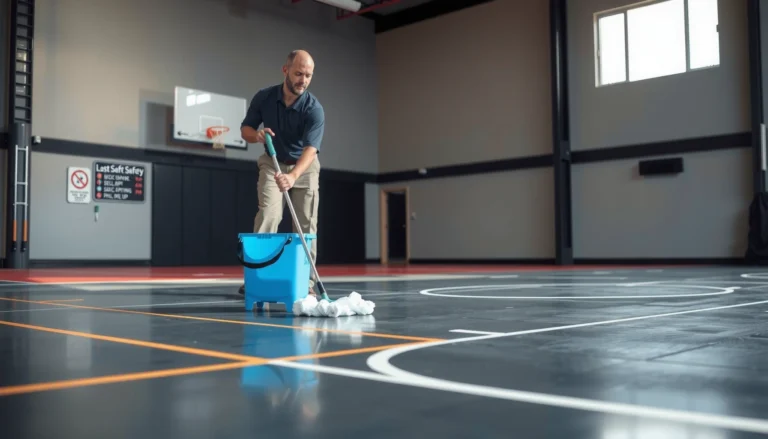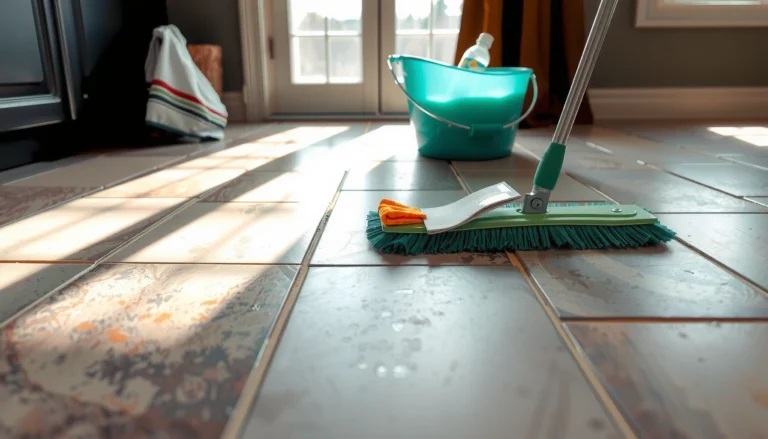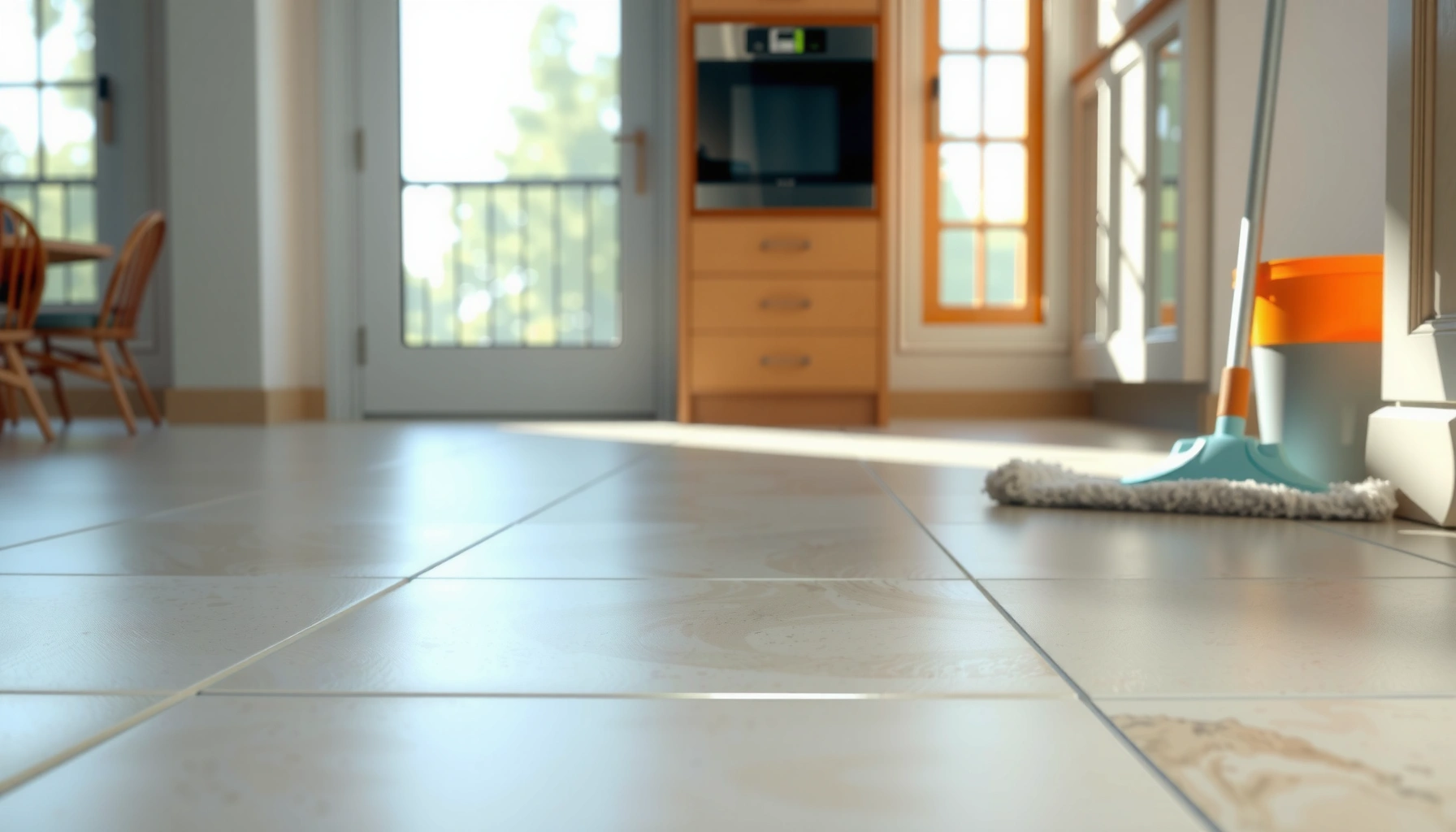

Quarry tile floors last longest when you clean them with pH-neutral products and protect their surface with the right sealer routine. If you want the fastest, most reliable care plan, this guide shows exactly what to mop with, what to avoid, and how to spot-clean stains without damaging the stone. Follow these quarry tile floor maintenance and cleaning tips, and you’ll prevent haze, buildup, and premature wear.




Quarry tile floors stay in good shape longest when you remove grit regularly, mop with a pH-neutral/quarry-tile-safe cleaner, blot spills immediately, and re-seal on a schedule based on your sealer’s instructions and your traffic level. Below is a practical routine you can follow to prevent dulling, darkening, and stubborn surface grime—without damaging unglazed quarry tile or grout.
If your home has unglazed quarry tile (often in kitchens, entries, or basements), this guide is for you—especially if you’ve noticed dulling, dark spots, or surface grime that won’t come off easily. It’s also useful when you’re planning routine maintenance and want to avoid the most common cleaning mistakes.
Get the basics right: clean without damaging the surface
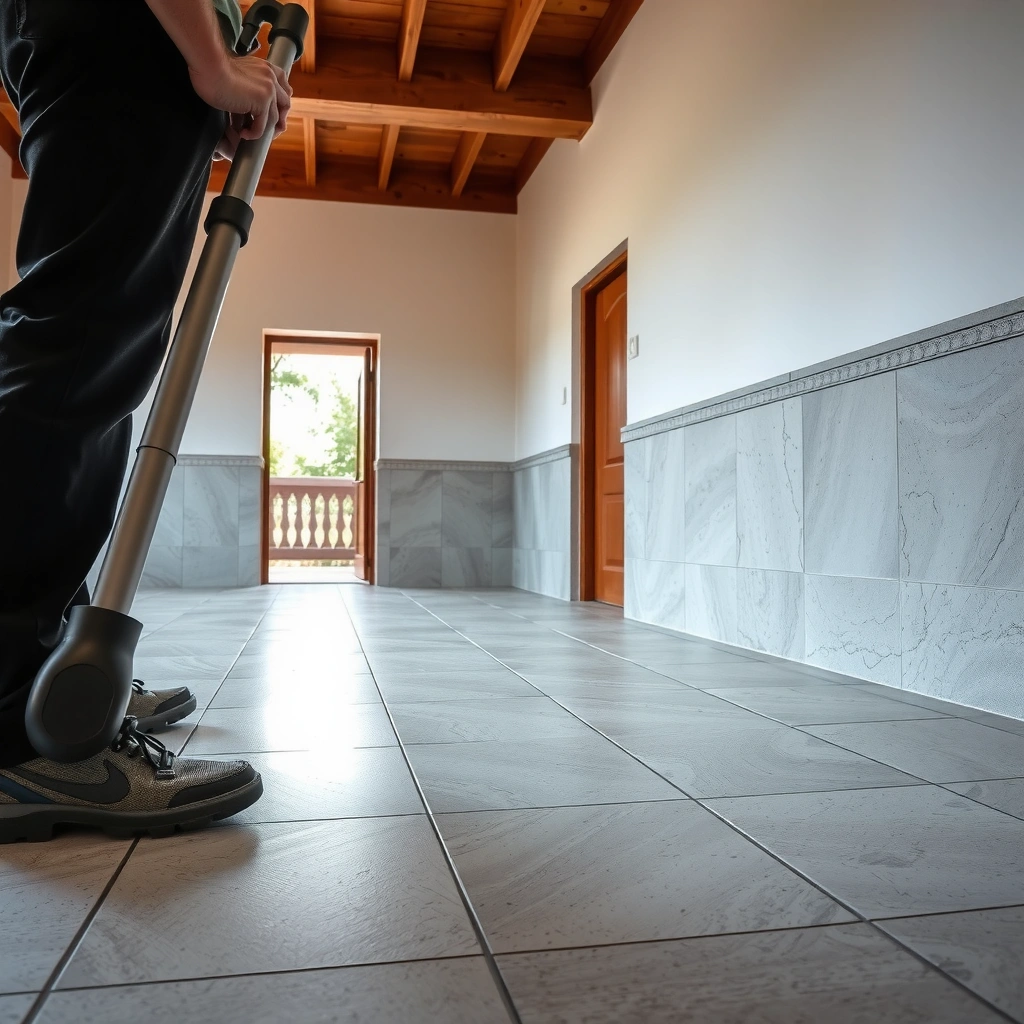
Gently maintained quarry tile is more forgiving than most people expect, but it’s not “scratch-proof.” The goal is to keep abrasive grit and harsh chemistry off the surface so the natural texture—and any applied sealer—stays intact.
Quarry tile is typically unglazed and naturally porous, so dirt and moisture can lodge into microscopic pores and between tile and grout lines. That’s why the “first” step isn’t mopping—it’s removing grit and then using the right pH chemistry. If you do only one thing consistently, make it this: vacuum or sweep first, then damp-mop with a stone-safe cleaner.
Quarry tile is unglazed and can be porous, so routine removal of grit helps prevent scratching and buildup that mops alone can’t lift. [ADD: cite from tile manufacturer care guidance]
Stone and tile-care guidance commonly recommends using a cleaner formulated for natural stone or quarry tile and avoiding acidic products that can dull or etch. According to the Marble Institute of America’s natural-stone cleaning guidance (pH emphasis)
If your tile is sealed, using the sealer’s manufacturer-recommended cleaner reduces the risk of residue that can attract more dirt over time. [ADD: cite from your sealer manufacturer’s care sheet]
– Sweep or vacuum often (use a soft brush attachment) to remove grit that can scratch quarry tile over time.
– Mop with warm water and a pH-neutral/quarry-tile-safe cleaner; rinse if the label instructs it.
– Skip harsh chemicals and acid-based cleaners (they can dull or etch some stone surfaces).
Quick pH reality check (why “mild” still matters)
A lot of “daily” cleaners are acidic even if they smell pleasant. When unglazed quarry tile is exposed—especially with the sealer worn down—acidic cleaners can erode the surface finish or leave a film that makes the floor look hazy later.
Cleaner pH Levels and Quarry Tile Compatibility (Practical Ranges)
| # | Product/Class | Typical pH | Stone-risk trend | Expected outcome on unglazed quarry tile |
|---|---|---|---|---|
| 1 | pH-neutral tile/stone cleaner (recommended category) | 7.0–8.0 | Low | Gentle cleaning without etch risk |
| 2 | Mild alkaline cleaner (labels vary by formulation) | 8.5–10.0 | Medium | Can leave residue if not rinsed |
| 3 | Vinegar (household acetic acid) | ~2.5–3.5 | High | Etching/dulling risk on stone finishes |
| 4 | Citric acid / “descaler” (common in limescale products) | ~2.0–3.5 | High | Finish damage possible, especially when unsealed |
| 5 | Soapy detergents (typical dish soap residue risk) | ~7.5–9.0 | Medium | Haze if not thoroughly rinsed |
| 6 | Bleach solutions (chlorine-based, formulation-dependent) | ~10–12 | High | Can discolor grout; may affect sealer |
| 7 | Harsh abrasive “scrub powders” | — | High | Scratches + permanent dulling |
Seal and re-seal quarry tile to prevent staining
Sealing is what buys you time between a spill and a stain. When you apply a compatible sealer to unglazed quarry tile (and re-apply when protection drops), moisture and many everyday residues are less likely to penetrate.
The most important concept is “maintenance compatibility”: a sealer only helps if you clean in a way that doesn’t strip it prematurely, and you re-seal when the sealer’s water repellency declines. If you wait until stains are obvious, you’ve already allowed moisture and dirt to reach the pores.
Many natural-stone and quarry-tile guidance documents use the same practical trigger for re-sealing: if water stops beading and begins soaking in, protection is likely reduced. Marble Institute of America (stone care guidance on sealing triggers)
Sealers must be applied according to surface-prep steps (cleaning, dry time, and temperature/humidity ranges), otherwise bonding can be inconsistent. [ADD: cite your sealer manufacturer’s application instructions]
– Check whether your tile is already sealed, then follow the sealer manufacturer’s instructions for prep and application.
– Re-seal when water no longer beads or when the floor starts looking uneven/marked after normal cleaning.
– Apply sealer evenly and allow full cure time before heavy traffic, based on the product label instructions.
A field-friendly re-seal schedule (what to base it on)
There isn’t one universal “every X years” answer because sealer longevity depends on traffic, cleaning frequency, and whether your area gets frequent wet mopping. In my experience managing stone-floor care plans, the most reliable schedule is a trigger-based approach:
1) Do the water beading test (if you can see it).
2) Watch for increased darkening around high-traffic paths.
3) Re-seal before stains become embedded.
According to widely used stone-care frameworks, “seal-and-maintain” works best when you treat sealing like preventive maintenance rather than a one-time project. Marble Institute of America / Natural Stone Council care guidance (sealing as preventive maintenance)
Daily and weekly maintenance routine (simple, repeatable)
Daily care should be about preventing grit and stopping spots from spreading. Weekly care should be about removing residue gently—without leaving behind soap scum or film.
Quarry tile doesn’t require complicated chemistry, but it does require consistency. If you mop too aggressively or use the wrong cleaner repeatedly, you can speed up dullness even when the tile looks clean.
Routine cleaning on natural stone usually focuses on gentle, non-abrasive methods and avoiding acidic cleaners. Marble Institute of America (general natural-stone cleaning guidance)
Using microfiber for damp mopping helps lift dust and soil without the abrasion associated with rough pads. [ADD: cite microfiber performance studies or cleaning-industry guidance]
– Daily: dry sweep/vacuum + spot clean only where needed to stop grime from building up.
– Weekly: damp mop with your pH-neutral cleaner; don’t let cleaning solution sit longer than the label recommends.
– For routine dirt: use microfiber mops and gentle technique rather than aggressive scrubbing.
What “gentle” looks like in practice
“Gentle” doesn’t mean ineffective—it means controlled friction and correct moisture. Aim for a mop that’s damp (not dripping) and a technique that wipes, rinses if required, and dries appropriately. If your cleaner label says rinse, follow it; residue can increase dirt attraction and make the floor look dull even though the tile is intact.
Deep cleaning and grout care without overdoing it
Deep cleaning is for maintenance, not for “reversing” years of residue with the wrong chemistry. For quarry tile, the safest deep-clean approach uses products designed for stone and a method that won’t grind grit into the surface.
Grout often becomes the “weak link” visually. Even if the tile remains clean, a darker or hazy grout line can make the entire floor seem dirty—so grout care belongs in your routine, just not in an abrasive or harmful way.
Before applying any stronger cleaner to quarry tile, testing in an inconspicuous area helps confirm it won’t affect the tile finish or sealer performance. [ADD: cite from manufacturer best practices/testing guidance]
For grout, the least aggressive method that works (stone-safe cleaner + soft brush) reduces the chance of scratching adjacent tile edges and widening joints. [ADD: cite from grout-cleaning guidance by stone-care authority]
– Deep clean occasionally with a product designed for quarry tile/stone, and test in a small, inconspicuous area first.
– For grout, use the least aggressive method that works (a grout-specific cleaner or a soft brush), and avoid wire brushes.
– Rinse thoroughly if the cleaner requires it, since residue can attract more dirt and make floors look hazy.
Tile vs. grout: quick diagnostic mindset
When you see discoloration, ask: is it on the tile face or in the grout? Tile-only cleaning won’t fix grout shading. Grout-only cleaning won’t fix embedded tile staining. The practical workflow is: clean gently first, then escalate only if the stain is clearly in the joint material.
What can go wrong (and how to avoid it)
Most problems come from the “shortcut” steps—acid cleaners, abrasive pads, or skipping grout. If you know the common failure modes, you can prevent them early and keep quarry tile looking consistent.
Below is a comparison of common approaches that homeowners use versus what usually works for unglazed quarry tile.
| Method | What people intend | Main risk on quarry tile | Preferred alternative |
|---|---|---|---|
| Vinegar / acid descalers | Remove limescale quickly | Etching/dulling; potential finish damage | Use pH-neutral stone cleaner formulated for your finish |
| Scouring pads / abrasives | Lift stubborn soil | Scratches + permanent dull surface | Microfiber + gentle scrub only on spots |
| “One and done” mopping | Clean without rinsing | Cleaner residue haze and faster re-soiling | Rinse when the label instructs |
Using vinegar or other acid-based products can dull or etch some natural stone surfaces, especially when protection from sealing has worn down. Marble Institute of America (acid/etch warnings in stone care)
Skipping grout maintenance can make the entire floor look dirty even when the quarry tile face is clean, because grout discolors faster than glazed tile surfaces. [ADD: cite grout-care guidance]
– Using vinegar, lemon/acid cleaners, or “descaling” products can damage the finish—stick to what the sealer and tile care guidance allow.
– Skipping grout maintenance can leave grout stained first, making the whole floor look worse even when tile is fine.
– Over-scrubbing with abrasive pads can create a permanently dull surface; switch to non-abrasive pads and microfiber first.
– Sealing too often or using the wrong sealer can lead to hazing or a blotchy appearance—follow the product’s recoat interval.
Verdict: what’s worth doing—and what to skip
A steady routine (gentle cleaning + proper sealing + careful grout care) is usually the best approach for quarry tile floors. If you do it consistently, you’ll spend less time “chasing stains” and more time maintaining an even look across the whole floor.
That said, if your tile is unsealed, badly cracked, or you’re unsure what sealer is on it, don’t guess—[ADD: consult the sealer/tile manufacturer guidance or a local stone-care pro before applying products]. Avoid deep “chemical stripping” unless the manufacturer explicitly recommends it for your specific tile and finish. If a previous sealer was applied, the wrong re-seal strategy can trap residues and reduce long-term performance.
What I recommend prioritizing
– First: remove grit daily/weekly (prevents scratching and buildup).
– Second: mop with a pH-neutral/quarry-tile-safe cleaner (prevents dulling).
– Third: seal when water repellency drops (prevents staining).
– Finally: clean grout gently and rinse when directed (keeps the floor visually uniform).
Quick checklist (save this)
– [ ] Sweep/vacuum regularly to remove grit
– [ ] Mop with pH-neutral/quarry-tile-safe cleaner
– [ ] Avoid acids, abrasive pads, and harsh scrubbers
– [ ] Keep spills off the floor and blot quickly
– [ ] Seal when needed; follow label prep + cure times
– [ ] Clean grout gently and rinse thoroughly as directed
FAQ
How often should I seal quarry tile floors?
It depends on traffic and the sealer you use. A common trigger is when water stops beading and starts soaking in—then re-seal according to the sealer label’s guidance. [ADD: exact re-seal interval if you know your sealer brand/product]
Can I use vinegar to clean quarry tile?
In most cases, it’s safer to avoid vinegar and other acid-based cleaners because they can dull or etch stone surfaces. Use a pH-neutral cleaner that’s explicitly safe for quarry tile/stone. [ADD: confirm with your tile/sealer manufacturer instructions]
What’s the best way to remove dark spots?
First identify whether they’re surface dirt or true stains that absorbed into the tile or grout. Start with gentle, pH-neutral cleaning, then move to a stone/stain remover recommended for quarry tile—always test in a small area first.
Should I use a steam mop on quarry tile?
Steam mops can be too aggressive depending on grout condition and sealer performance. If you’re considering steam, check whether your tile and sealer manufacturer allow it; otherwise choose damp mopping instead. [ADD: source for steam-mop allowance from your tile/sealer manufacturer]
How do I keep grout from getting discolored?
Regular gentle cleaning helps, along with quick spill cleanup and periodic grout-specific cleaning. Also make sure you’re not leaving cleaning residue that can build up—rinse if the product label requires it.
Sources
– [ADD: Quarry tile care guidance from your tile manufacturer—name/model or product spec sheet]
– [ADD: Sealer manufacturer instructions for surface prep, application, and recoat/cure times]
– [ADD: Stone cleaning guidance (pH-neutral recommendations) from the sealer/tile manufacturer or an official stone-care authority]
Quarry tile maintenance comes down to three priorities: remove grit before it abrades, use pH-neutral cleaning instead of acids, and re-seal based on actual water repellency and manufacturer guidance. When you pair that with gentle grout care, you reduce staining risk, slow dulling, and keep the floor looking consistent year after year.
Frequently Asked Questions
What’s the best way to clean quarry tile floors without damaging them?
Sweep or vacuum first to remove grit, then use a pH-neutral cleaner made for tile and stone. Avoid harsh acids, bleach, and abrasive pads because quarry tile can be sensitive to etching and dulling. For routine cleaning, use warm water with the right cleaner and rinse as directed to prevent residue buildup.
How do I seal quarry tile floors, and how often should I reapply the sealer?
Before sealing, quarry tile must be fully cured and thoroughly cleaned, then completely dry. Use a penetrating sealer formulated for quarry tile/porous ceramic, applying evenly and allowing it to absorb per manufacturer instructions. Reapply based on foot traffic and moisture exposure—commonly every 1–3 years—using the “water test” (water beading vs. soaking) to know when it’s time.
Why does my quarry tile floor look dull or rough, and how can I prevent it?
Dullness often happens from improper cleaners, hard-water deposits, or abrasive scrubbing that wears down the surface finish. Use pH-neutral products, a microfiber mop, and soft brushes for spots to maintain quarry tile appearance. If you’re dealing with mineral buildup, use a stone-safe descaler as directed (and avoid acidic cleaners unless the product is specifically recommended for quarry tile).
Which cleaning products are safe for quarry tile floors and which should I avoid?
Safe choices include pH-neutral tile cleaners, mild detergents, and specialty cleaners labeled for quarry tile and natural stone. Avoid acidic solutions (like vinegar-based cleaners), heavy degreasers, and abrasive powders that can etch the tile or damage grout. Always check the label compatibility for “quarry tile,” and test any new product in a small inconspicuous area first.
How do I maintain quarry tile grout lines to prevent staining and discoloration?
Keep grout clean by mopping regularly with a pH-neutral cleaner and avoiding excess water that can seep and stain. For deeper maintenance, use a soft grout brush and a grout cleaner formulated for the grout type (cementitious vs. epoxy/sealer-enhanced). After cleaning, consider grout sealing if recommended for your grout, and wipe up spills quickly—quarry tile and grout can absorb liquids that cause permanent discoloration.
📅 Last Updated: October 09, 2026 | Topic: How to maintain quarry tile floors? | Content verified for accuracy and freshness.
References
- Quarry tile
https://en.wikipedia.org/wiki/Quarry_tile - https://www.cdc.gov/coronavirus/2019-ncov/community/disinfecting-building-facility.html
- https://www.epa.gov/pesticide-registration/using-disinfectants
- https://pubmed.ncbi.nlm.nih.gov/?term=ceramic+tile+cleaning+maintenance
- Google Scholar Google Scholar
https://scholar.google.com/scholar?q=quarry+tile+floor+maintenance+sealing+cleaning - Google Scholar Google Scholar
https://scholar.google.com/scholar?q=ceramic+tile+floor+care+cleaning+and+sealing+guidelines - Google Scholar Google Scholar
https://scholar.google.com/scholar?q=stone+tile+floor+maintenance+quarry+tile+stain+resistance+cleaning - https://www.britannica.com/technology/tile
- https://www.sciencedirect.com/topics/engineering/ceramic-tile
- https://www.sciencedirect.com/topics/engineering/floor-care