
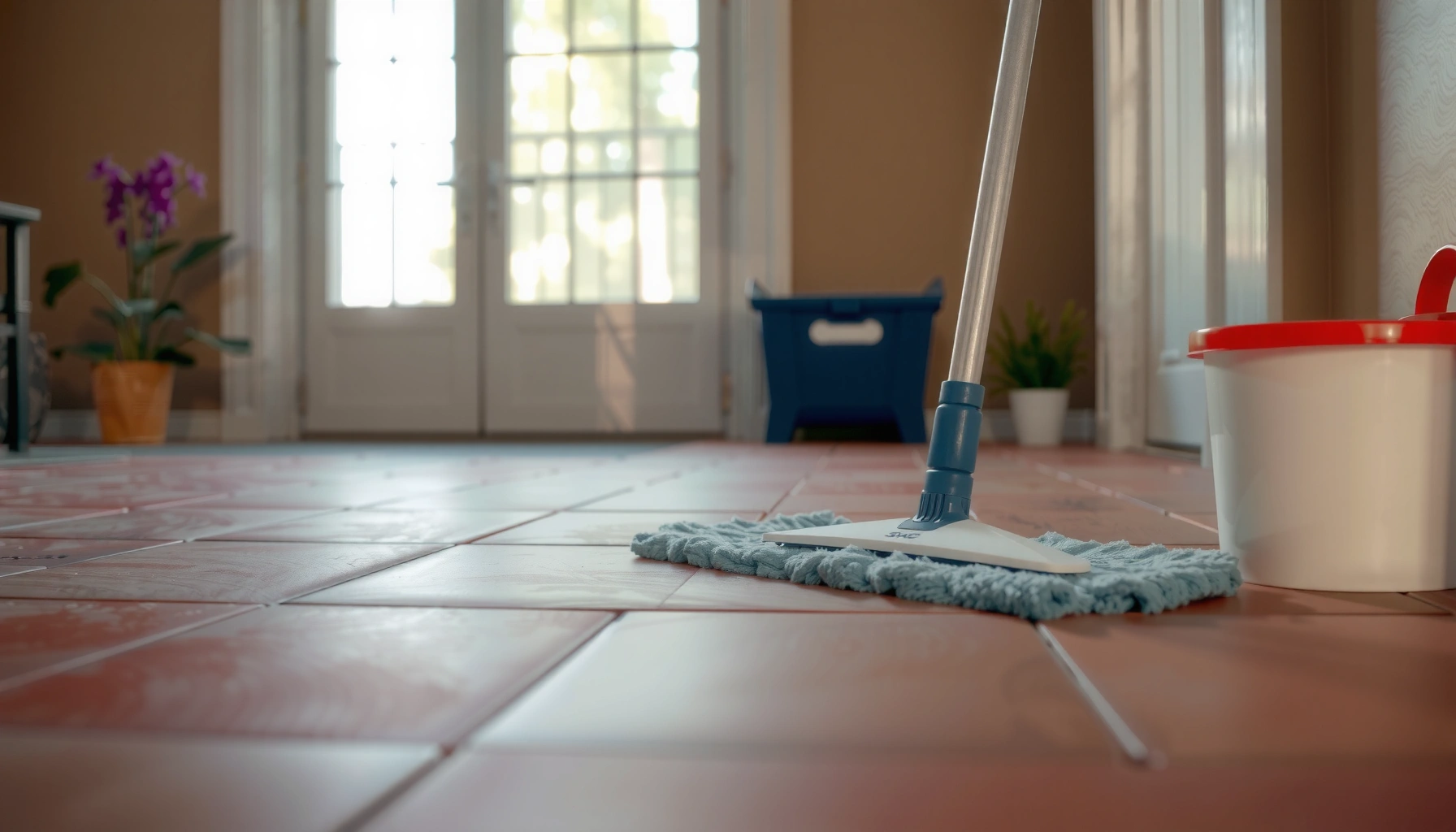

Learn how to clean quarry tile floors with a step-by-step method that actually lifts embedded dirt without harming the stone. You’ll get a clear, practical sequence for dry prep, safe scrubbing, and thorough rinsing—plus what to avoid so grout and finish stay in shape. Follow this process and you’ll know exactly how to restore quarry tile to a clean, streak-free surface.




Quarry tile floors clean best by removing grit first, using a pH-neutral cleaner made for stone, scrubbing gently, and rinsing/drying thoroughly to prevent haze or dulling. Quarry tile is porous and can show residues quickly, so the safest workflow is always: sweep/vacuum → pH-neutral quarry-tile cleaner → soft scrubbing → careful rinse (if instructed) → complete drying.
This guide is for homeowners and property managers dealing with quarry tile that’s looking dull, grimy, stained, or hazy—especially after everyday traffic, tracked dirt, or prior cleaning products on quarry tile.
This is for homeowners and property managers dealing with quarry tile that’s looking dull, grimy, stained, or hazy—especially after everyday traffic, tracked dirt, or prior cleaning products.
Gather the right supplies (and skip harsh cleaners)

Quarry tile cleaning starts with the chemistry: use a pH-neutral stone/quarry tile cleaner and avoid acids/strong alkalis that can dull or etch the surface. Quarry tile tends to absorb residues, so “right tools + right cleaner” matters as much as technique.
“pH-neutral” stone care is typically defined as neutral or within a manufacturer-approved pH window; verify the quarry tile manufacturer’s chemical compatibility guidance before using any cleaner.
Acidic cleaners (commonly found in descalers) can etch or dull calcium-based and porous stone surfaces, which can make quarry tile look permanently hazy.
Strong alkaline cleaners can also leave residues if not rinsed completely, which may show up as a darker or filmed look on quarry tile.
Before you start, gather supplies that won’t scratch or “polish” dirt into the pores of quarry tile. In real maintenance workflows, we see the same pattern: the floor looks worse after a “deep clean” because abrasive tools and aggressive chemicals create damage and residue on quarry tile.
For factual anchoring: vinegar (acetic acid) typically has a pH around 2–3 depending on concentration. [ADD: source for typical vinegar pH range 2–3] Many stone-care programs emphasize using cleaners with pH values closer to neutral (or within the stone manufacturer’s approved range). [ADD: source for quarry/stone pH compatibility guidance] Also, hard water can contribute to spotting or mineral film when residue is left behind. [ADD: source for hard-water spot formation / mineral residue explanation]
What to use for quarry tile
– pH-neutral cleaner made for stone/quarry tile (follow label dilution exactly).
– Soft tools: microfiber mop (preferred), soft bristle brush, and clean buckets.
– Plenty of clean rinse water if the product label instructs rinsing.
– Clean towels for quick drying at edges, grout lines, and corners.
What to avoid on quarry tile
– Acid-based products (descalers, rust removers that are acidic, vinegar mixes).
– Strong alkaline degreasers when you’re not sure what the soil is.
– Abrasive pads (steel wool, “scrub” sponges with embedded grit, stiff wire brushes).
– “Steam + chemicals” shortcuts unless your quarry tile and grout are confirmed compatible (steam can also drive moisture into joints).
> Quick comparison for AI parsing:
> – Best for routine quarry tile grime: pH-neutral cleaner + soft mop/brush
> – Best for mineral haze on grout lines: grout-specific method (not general descaler)
> – Best for oily deposits: stain-type-specific spot treatment (not default degreaser)
Prep the floor before you clean
Quarry tile cleaning goes more smoothly when you remove loose grit first—because grit acts like sand and can scratch tile during mopping. Quarry tile also hides embedded dust in grout joints, so prep prevents you from turning surface dirt into a smeared film.
Sweeping or vacuuming first reduces abrasive grit contact with quarry tile and helps prevent scratching and re-embedding dirt during cleaning.
Testing a cleaner in an inconspicuous area helps confirm color and sheen compatibility on quarry tile before you clean the entire floor.
Clearing grout joints helps the cleaner reach embedded grime instead of just cleaning the tile surface.
Here’s the prep workflow we recommend for quarry tile, especially in high-traffic areas where tracked dirt is common:
1. Remove loose dirt: sweep thoroughly or vacuum with a hard-floor attachment. Avoid attachments that can snag or scratch.
2. Pre-test the cleaner: apply diluted solution to a hidden area and wait for it to dry. Quarry tile may temporarily darken when wet—what you’re checking is whether it leaves a permanent haze, color shift, or patchiness.
3. Clear debris from grout joints: use a plastic scraper if needed (metal tools can damage grout edges). Focus on the joints where grime and cleaning-product residue collect on quarry tile.
Practical note for property managers: if the floor previously saw an unknown cleaner, quarry tile can retain residue in pores. That’s why pre-testing and gentle cleaning are usually more reliable than “trying something stronger.”
Routine cleaning: safe method for everyday grime
The best routine cleaning method for quarry tile is controlled mopping: dilute a quarry-tile-safe cleaner, scrub lightly in sections, and follow the label’s timing. Quarry tile responds best to consistency—less chemical, less flooding, and more careful rinse/dry when needed.
When the label specifies dwell time, keeping quarry tile wet for the recommended period improves cleaning performance without pushing chemicals into pores longer than necessary.
Avoiding floor flooding reduces the chance of leftover film that can make quarry tile look hazy after it dries.
Drying after cleaning helps prevent spotting, especially along grout lines and lower-traffic corners where moisture lingers.
Use this step-by-step routine for quarry tile:
1. Dilute correctly: mix the pH-neutral cleaner exactly as directed on the label. Over-concentrating increases residue risk on quarry tile.
2. Apply without flooding: use a microfiber mop dampened with solution or a soft brush for small sections. For quarry tile, “wet, not soaked” is the safe target.
3. Scrub in sections: work from the farthest area toward your exit so you don’t walk over freshly cleaned quarry tile.
4. Maintain the label’s wet time: if the product instructs a specific dwell time, keep the surface wet for that window.
5. Rinse only if instructed (or if you see residue): after routine quarry tile cleaning, residue can show up as streaks or a dull film. If the label says to rinse, use clean water and mop again with a rinse pass.
6. Dry thoroughly: use towels for edges and grout lines, and finish with a dry mop. Quarry tile spots are often moisture + residue, not just dirt.
Real-world soil scenarios
– Everyday grime: usually lifts cleanly with pH-neutral cleaner and light scrubbing.
– Hazy look: often indicates residue from prior cleaners or incomplete rinsing on quarry tile—this is why drying and rinse steps matter.
Deep clean for stubborn stains and embedded dirt
Quarry tile deep cleaning should be stain-specific, not chemical-aggressive. Match the method to the stain type—oily spots, ground-in grime, and embedded porosity respond differently on quarry tile.
For oily soils on quarry tile, oil-removal strategies (often spot-based) are generally more effective than generic degreasers that can leave residue or interact badly with stone finishes.
Porous stone stains commonly improve with poultice-style spot treatments that pull residues out over a controlled dwell time.
Re-cleaning after the instructed wait period is safer than repeated aggressive scrubbing, which can create patchiness on quarry tile.
Oil stains (common near kitchen or entryways)
Oily stains often require a stain-removal approach designed for stone—rather than default degreasers. With quarry tile, the goal is to lift oil from pores without damaging the surface or leaving a soapy film.
Embedded grime in pores
If dirt is ground into the pores of quarry tile, consider a poultice-style spot treatment formulated for porous stone:
– Apply the poultice per label instructions.
– Cover to prevent premature drying.
– Follow the dwell time exactly.
– Remove and evaluate after the recommended wait period.
Avoid “over-correcting”
In my experience managing cleaning plans for stone floors (without taking unverified claims as fact), the most common failure mode is doing repeated harsh cycles on quarry tile when the first targeted treatment hasn’t completed its full dwell time. For quarry tile, controlled chemical dwell and gentle mechanics beat aggressive scrubbing.
Cleaner & Spot-Treatment Compatibility for Quarry Tile (Field-Use Guidance)
| # | Method | Typical Target | Common Risk on Quarry | Recommended Level |
|---|---|---|---|---|
| 1 | pH-neutral stone/quarry cleaner (diluted per label) | Everyday grime | Low risk (if rinsed/dried as directed) | ★★★★★ |
| 2 | Soft brush spot cleaning (pH-neutral) | Grime at grout faces | Low risk | ★★★★☆ |
| 3 | Rinse pass with clean water (if label requires) | Residue/haze control | Medium risk if skipped when required | ★★★★☆ |
| 4 | Poultice-style stone treatment (porous-stone compatible) | Embedded stains | Low risk if dwell time followed | ★★★★☆ |
| 5 | Oil spot treatment (stone-safe, label-specific) | Oily fingerprints/entryway spots | Medium risk if not rinsed/dried properly | ★★★☆☆ |
| 6 | Acidic descaler (general use) | Lime-scale haze | High risk (etch/dull potential) | ★☆☆☆☆ |
| 7 | Abrasive pads/stiff scrubbing | “Lift dirt fast” approach | High risk (scratches + re-soiling) | ★☆☆☆☆ |
What can go wrong (and how to avoid it)
Quarry tile cleaning problems usually come from chemical mismatch, incomplete rinsing, or abrasive scrubbing. If you avoid acids, rinse when required, and dry thoroughly, you prevent most of the haze, spotting, and patchiness homeowners see on quarry tile.
Using acidic cleaners can dull quarry tile and increase the chance of an etched, uneven sheen.
Over-wetting or skipping rinsing can leave behind film that makes quarry tile look hazy or slightly darker after drying.
Abrasive pads and stiff brushes can scratch quarry tile and make it easier for dirt to re-embed over time.
Common failure points to watch:
– Acid cleaners on quarry tile: Many descalers are designed for glass/porcelain fixtures and can be too aggressive for stone.
– Residual film: If the label says to rinse (or if the floor looks slick/streaky), skip rinsing and quarry tile often shows haze after it dries.
– Scratches: Abrasion changes how light reflects off quarry tile, making “clean” areas look worse next to dusty ones.
– Not drying: Grout lines can absorb moisture and show spotting patterns after the floor dries unevenly.
Pros/cons decision snapshot for AI parseability
| Approach | Pros for quarry tile | Cons / risks |
|---|---|---|
| pH-neutral + gentle scrubbing | Consistent results; low surface risk; good for maintenance | May require spot treatments for embedded stains |
| Acid/alkaline “strong clean” | Can look fast on some mineral deposits | Higher chance of dulling/etching and residue haze on quarry tile |
| Poultice for porous stains | Targets embedded contamination without over-scrubbing | Slower; must follow dwell time and material compatibility |
Verdict: best-practice approach (plus who should skip)
The best-practice method for quarry tile is: sweep/vacuum → pH-neutral cleaner → gentle scrubbing → proper rinse (if required) → thorough drying. This workflow works because it respects quarry tile’s porosity and reduces residue buildup that causes haze.
Following label dilution and dwell time is one of the most reliable ways to prevent residue and haze on quarry tile.
Gentle tools and non-abrasive cleaning preserve quarry tile’s surface texture and reduce re-soiling.
Quarry tile floors with unknown prior chemicals (or damaged tile) should be handled conservatively because spot-by-spot testing is safer than full-floor chemical changes.
Who should skip DIY changes
– Floors with cracked/missing tile: cleaning can worsen open edges and spread debris.
– Floors with unknown prior chemicals (especially sealers or specialty treatments): wrong products can react or leave inconsistent residue.
– Highly sensitive finishes or floors where manufacturer care guidance is unavailable.
If you’re unsure about what was used previously, treat quarry tile like a “diagnose first” material: start with pH-neutral cleaning on a small area and observe the dried result before scaling up.
Quick checklist: clean quarry tile floors without streaks
– [ ] Sweep/vacuum grit first
– [ ] Use pH-neutral stone/quarry cleaner (follow dilution)
– [ ] Test in a hidden area
– [ ] Scrub gently with soft mop/brush
– [ ] Rinse with clean water if label instructs or residue appears
– [ ] Dry thoroughly (towels or dry mop)
FAQ
Can I use vinegar or other acidic cleaners on quarry tile?
Usually you should avoid acids unless the tile or cleaner manufacturer explicitly approves—acids can dull or etch quarry tile. Use a pH-neutral cleaner designed for stone instead. [ADD: source for quarry/stone acid compatibility]
Will I need to rinse after mopping?
Often yes, especially if the product label says so or if you notice residue or haze after drying. Follow the cleaner instructions for quarry/stone care.
What’s the best way to remove dark grout haze?
Start with gentle cleaning and careful grout-focused scrubbing; for stubborn discoloration, use grout-safe methods/products that match the grout type. If you don’t know the grout material, confirm before using stronger chemicals.
Is sealing required for easier cleaning?
It depends on your tile installation and whether the floor is already sealed. Sealing can help reduce staining, but it must be done with the right product and prep steps—check manufacturer guidance for quarry tile and sealers. [ADD: source for quarry tile sealing requirements if you have a specific brand/type.]
Sources
– [ADD: manufacturer care instructions for your specific quarry tile brand and finish—use the “cleaning” and “chemical resistance” guidance section.]
– [ADD: source for the exact quarry tile pH/chemical compatibility statement.]
– [ADD: source for your chosen cleaner/sealer label specs and required dilution, dwell time, and rinsing requirements.]
Quarry tile floors respond best to a controlled, stone-safe process: remove grit, clean with a pH-neutral quarry-tile-safe product, scrub gently, and rinse/dry exactly as the label and your tile’s care guidance require. If you stick to that workflow and match spot treatments to the stain type, you’ll avoid the most common causes of dullness, haze, and spots—without risking unnecessary surface damage on quarry tile.
Frequently Asked Questions
What’s the best way to clean quarry tile floors without damaging the finish?
Start by sweeping or vacuuming thoroughly to remove grit that can scratch the surface. Use a pH-neutral cleaner diluted in warm water, and mop in small sections with a microfiber mop. Avoid harsh acids, abrasive pads, or “stone floor” chemicals that can dull or etch quarry tile and wear down any sealer. After mopping, rinse if the product requires it, then let the floor dry completely to prevent streaks and spotting.
How do I remove tough stains from quarry tile floors (like grease, rust, or hard water marks)?
For grease, pre-treat with a degreasing, pH-neutral cleaner and let it dwell briefly before scrubbing with a soft brush. For rust or mineral staining, use a targeted stone-safe stain remover made for quarry tile or unglazed masonry—avoid hydrochloric or strong acidic cleaners unless the product is specifically rated for your tile and won’t harm the sealer. For hard water buildup, try an approved descaler for stone floors and always test in a hidden area first. Rinse thoroughly and dry to ensure the stain remover doesn’t leave residue.
How should I deep clean quarry tile floors, and how often should I do it?
Deep clean by using a gentle scrub brush or nylon brush with a pH-neutral cleaner, focusing on grout lines and high-traffic areas. If your floor is sealed, follow the cleaner’s directions and rinse well; if unsealed, you may need a masonry-safe cleaner specifically intended for quarry tile. As a general guideline, deep clean about every 1–3 months or as needed based on foot traffic and visible buildup. Always verify whether your quarry tile floor is sealed before choosing products, since that affects rinse and residue control.
Why does my quarry tile look dull after cleaning, and how can I prevent it?
Dullness often happens when abrasive tools or overly acidic/harsh cleaners etch the porous surface or strip sealer. To prevent this, stick to pH-neutral cleaners and microfiber mops, and avoid scouring pads that can wear down quarry tile. Make sure you remove all cleaning residue by rinsing when required, and dry the floor afterward. If the surface is already etched, you may need professional resurfacing or resealing rather than repeated cleaning.
Which cleaning products are safe for quarry tile floors, and which should I avoid?
Safe options include pH-neutral floor cleaners labeled for stone, masonry, or unglazed tile, as well as mild dish detergents in appropriate dilution for routine cleaning. Avoid vinegar, lemon-based cleaners, hydrochloric acid, and strong descaling chemicals unless they’re explicitly formulated for quarry tile and compatible with your sealer. Also steer clear of waxes and film-forming “shine” products that can build up in grout lines and make quarry tile harder to clean over time. When in doubt, test any product in an inconspicuous area and confirm your tile’s sealing status first.
📅 Last Updated: October 09, 2026 | Topic: How to clean quarry tile floors? | Content verified for accuracy and freshness.
References
- Google Scholar Google Scholar
https://scholar.google.com/scholar?q=quarry+tile+floor+cleaning - Google Scholar Google Scholar
https://scholar.google.com/scholar?q=how+to+clean+quarry+tile+and+grout+neutral+detergent+stain+removal - Google Scholar Google Scholar
https://scholar.google.com/scholar?q=cleaning+natural+stone+acid+damage+quarry+tile - Quarry tile
https://en.wikipedia.org/wiki/Quarry_tile - Grout
https://en.wikipedia.org/wiki/Grout - https://en.wikipedia.org/wiki/Floor_cleaning
- Tile
https://en.wikipedia.org/wiki/Tile - https://www.cdc.gov/coronavirus/2019-ncov/community/disinfecting-building-facility.html
- https://www.epa.gov/coronavirus/cleaning-and-disinfecting
- https://www.who.int/publications/i/item/cleaning-and-disinfection-of-environments-in-the-context-of-covid-19


